
Guinea fowl are extraordinary farm birds — tireless pest controllers, vocal alarm systems, and a joy to watch patrol the pasture. But unlike chickens, they have no innate homing instinct. Left to their own devices, a guinea flock will roost in trees, wander off the property, and end up as a predator's midnight meal. The good news: with a deliberate two-month training program, you can build habits that will keep your flock safely in the coop for years. This guide covers everything you need to know.
Why Coop Training Matters
Predator Protection
Foxes, coyotes, raccoons, and great horned owls hunt at night. A locked coop is the only reliable barrier between your flock and a devastating overnight loss.
Egg Collection
Guinea hens that are confined each morning will lay eggs in a predictable communal nest inside the run — eggs you can actually find and collect. Let them out unsupervised and they'll hide nests you'll never locate.
Daily Management
A coop-trained flock lets you control exactly when the birds go out each day — giving you the option to do a morning health check, medicate the water, or delay release during bad weather.
There is simply no substitute for a secure coop when it comes to long-term flock survival. Free-ranging guinea fowl are vulnerable every single night they sleep in trees or hedgerows. The investment in proper training pays dividends for the entire life of the flock.
Step 1 — Brooding Keets Properly (Weeks 0–6)
Coop training begins before the keets ever see the outside world. How you manage their first six weeks shapes how adaptable and calm they'll be once they hit the run.
Keets are notoriously fragile compared to baby chicks. They need a higher-protein feed (24–26% protein game bird starter), a heat lamp starting at 95°F and dropping 5°F each week, and a dry environment at all costs — wet or drafty brooders are the leading cause of early keet losses.
During brooding, handle the keets regularly. Birds that are comfortable around humans are far easier to manage during the training phase. You'll thank yourself later when you need to herd stragglers into the coop at dusk.
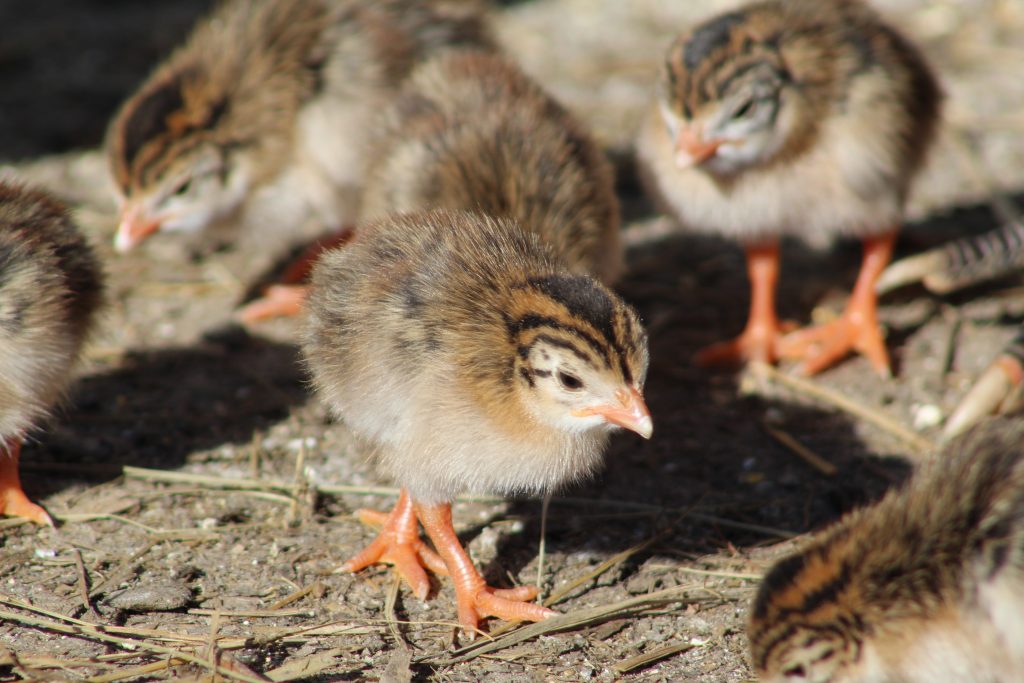
Don't rush the transition outdoors
Wait until keets are fully feathered before moving them to the coop — typically 6–8 weeks. Moving them out too early while they still need supplemental heat sets them up for stress and illness that undermines all the training that follows.
Step 2 — The Lockdown Period (Weeks 6–14)
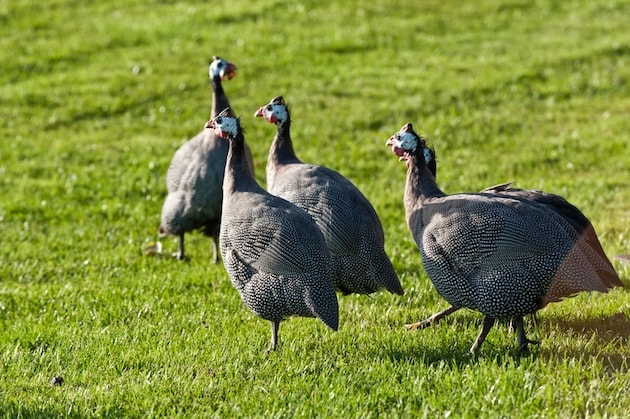
This is the single most important phase of the entire process. When you first move your keets to their permanent coop and run, do not let them out for approximately two months. Yes — two full months of complete confinement.
Unlike chickens, guinea fowl don't bond to a location simply because they were born there or spent a few days inside. They need extended, repeated exposure before a place registers as "home." Two months of eating, sleeping, and roosting in the same space builds the deep pattern recognition that will bring them back reliably every evening for years.
During lockdown, make the coop and run as enriching as possible. Scatter scratch grains, hang leafy branches for them to peck at, and ensure there is always fresh water. Boredom during lockdown can lead to feather picking and stress behaviors that carry forward once they're free-ranging.
What Your Run Needs During Lockdown
- Adequate roost bars: Install sturdy wooden roost bars inside the coop at 4–6 feet high. Guinea fowl are tree roosters by nature and feel most secure elevated. Allow 12 inches of bar length per bird, plus a lower step-up bar at 3–4 feet for younger birds still building confidence. Without high roost bars, guineas will pile in corners at night — a stress response that leads to injuries and smothering.
- Covered run with solid roof: A fully covered run protects against aerial predators (hawks, owls) during the day and prevents birds from flying out. Guinea fowl are strong fliers — a 6-foot open fence will not contain them once they feel comfortable enough to test the limits.
- Feed and water inside the coop: Place the main feed and water stations inside the coop, not just in the run. This conditions birds to enter the coop willingly every evening because that's where the good stuff is.
- Natural light: Guineas regulate their roosting behavior by light levels. Ensure the coop has windows or ventilation gaps that allow birds to see when dusk is approaching — they'll start making their way to the roost bars on their own.
Step 3 — Use Adult Guinea Hens as Mentors

"A single trained guinea hen is worth more than any amount of herding at dusk."
— Common wisdom among guinea fowl keepers
If you have the opportunity to raise keets alongside one or two adult guinea hens that are already coop-trained, do it. This is hands-down the most powerful shortcut in the entire training process.
Adult guinea hens have a strong instinct to go up to roost as the light fades each evening. They become visibly restless as dusk approaches, pacing toward the coop door and calling loudly. Keets are hardwired to follow the flock. When they watch the adult hens marching into the coop every single evening, they internalize that behavior as the correct thing to do. Within two or three weeks of watching this routine, the keets begin leading the march themselves.
This social learning effect is dramatically more effective than any human-led training technique. It works because it mimics how guinea fowl actually learn in the wild — by following experienced flock members.
A note on males vs. females
Guinea cocks (males) are significantly more resistant to going in at night than guinea hens. If you're adding adult birds to help train keets, prioritize hens. Cocks often need to be physically herded during the first weeks of free-ranging, especially if there are females still outside that they want to stay near. One stubborn cock can influence the rest of the flock to stay out with him — plan for this.
Step 4 — Build a Consistent Closing Routine
Whether or not you have adult hens, establishing a consistent routine during lockdown means that routine is already deeply ingrained by the time the birds get free-range access.
Every evening, 30 minutes before dark, go to the coop and do the same thing: shake a container of scratch or game bird pellets, call out with the same voice and phrase, and scatter feed inside the coop. Guinea fowl are highly intelligent and respond extremely well to conditioned cues. After a few weeks of this routine, the sound of the feed container will start triggering a stampede toward the coop door.
Do this every single evening without exception, even during lockdown when the birds can't leave anyway. You are building a pattern. By the time the lockdown ends, the routine is automatic on both sides — yours and the birds'.
The Ideal Evening Routine
- 1
30–60 min before dark: top off the water and toss scratch inside the coop
- 2
20 min before dark: make your call signal (shaking feed, a specific phrase)
- 3
As light fades: trained birds will already be heading for the roost bars
- 4
Full dark: do a quick headcount and lock the coop door
- 5
Leave the light off inside — darkness encourages roosting and discourages activity
Bonus Benefit: Controlling Egg Collection
One of the most underrated advantages of a coop-trained flock is reliable egg collection. Guinea hens that are confined each morning will establish communal nest sites inside the run — often one or two spots that the entire flock uses. This makes egg collection straightforward: check the nests mid-morning, collect what's there, and release the flock.
Guinea hens typically lay between 7 and 10 AM. If you release them before that window closes, they will begin laying outside — in tall grass, under brush piles, in fence rows — anywhere that feels private and hidden. These outdoor nests are nearly impossible to find consistently, and you'll lose most of your egg production to nature.
Pro tip: delay the morning release
Hold the flock until 10–11 AM during laying season (spring through early fall). Most hens will have finished laying by then, eggs will be in the run, and you can collect before letting everyone out. This one habit transforms guinea egg production from frustrating to predictable.
Step 5 — Introducing Free-Range Access (After Month 2)
After at least two full months of lockdown, you're ready for the moment of truth. But don't throw open the gate on a Monday morning and hope for the best. The transition to free-ranging should be gradual and deliberate.
One hour of freedom
Open the run gate 60–90 minutes before dark. The birds won't have time to range far before their instinct to roost kicks in, and the coop routine pulls them back. Stay near the coop and do your call routine as normal. Most birds will go back in without any herding.
Two to three hours
Extend the window slightly. Watch which birds come back easily and which ones need coaxing. Make note of any habitual stragglers — these are usually young males — and address them before extending further.
Half-day ranging
Release after the morning egg-laying window (10–11 AM). Birds will have the majority of the day to forage and should reliably return by dusk. Continue the evening routine without exception.
Full free-range
At this point, the habit is established. Continue the evening call routine indefinitely — this reinforcement is what maintains the behavior over time. Never assume the training is 'done' and stop the routine.
Always do a headcount
Every single evening after free-ranging, count birds before locking the coop. One bird left outside is a bird that won't be there in the morning. If someone is missing, search the perimeter while there's still a little light — they're usually nearby, just confused or stuck somewhere.
Frequently Asked Questions
How long does the lockdown period need to be?
Plan for a minimum of 6–8 weeks — roughly two full months. Rushing this step is the single most common reason guineas fail to return to the coop. Their home recognition is built through repetition, not instinct, and two months gives them enough time for the coop to become deeply ingrained as 'home base.'
What if my guineas still won't go in after the lockdown?
First, check that the coop is welcoming: is it bright enough inside at dusk? Are the roost bars high enough (guineas prefer 4–6 feet)? Is there feed and water inside? Try letting them out only 30–45 minutes before dark for the first week of free-ranging so hunger and habit pull them back in naturally.
Do I need guinea hens, or can I train keets alone?
You can train keets-only flocks, but it takes more patience and consistent human reinforcement (shaking a feed container at dusk, etc.). Adult guinea hens dramatically shorten the training curve because keets are hardwired to follow the flock, and hens go up reliably every evening without any prompting.
What age should I start the lockdown process?
Move keets to the coop or enclosed run between 6–8 weeks of age, once they are fully feathered and no longer need supplemental heat. Starting the lockdown at this age lets them associate the coop as home from the very beginning of their outdoor life.
How do I collect guinea eggs if they're in the run?
Guinea hens tend to lay communal nests — once one hen picks a spot inside the run, others follow. Check for eggs mid-morning before releasing the flock. If you release them before they've finished laying, they'll begin hiding nests outside, which makes collection nearly impossible.
How many roost bars do I need?
Allow approximately 12 inches of roost space per bird. Guineas prefer to roost together in a tight line, so a single long bar at 4–6 feet high works well. Add a secondary bar at a slightly lower height (3–4 feet) as a stepping-stone for young birds still building confidence.
The Payoff Is Worth Every Day of Patience
Guinea fowl are not chickens. They require a deliberate, patient approach to become reliable coop returnees. But once trained — really trained, after two solid months of lockdown and consistent routine — they will return to that coop for years. You'll have a flock that's safe from predators every night, that lays eggs where you can find them, and that you can manage on your schedule rather than theirs.
If you're just getting started with guinea fowl and want to hatch your own keets, we ship fertile guinea fowl eggs directly from our farm in Cameron, Texas. Every egg comes from our own flock of Pearl and Lavender guineas — the same birds that inspired this guide.
Order Guinea Fowl Eggs